By Oliver Tymo
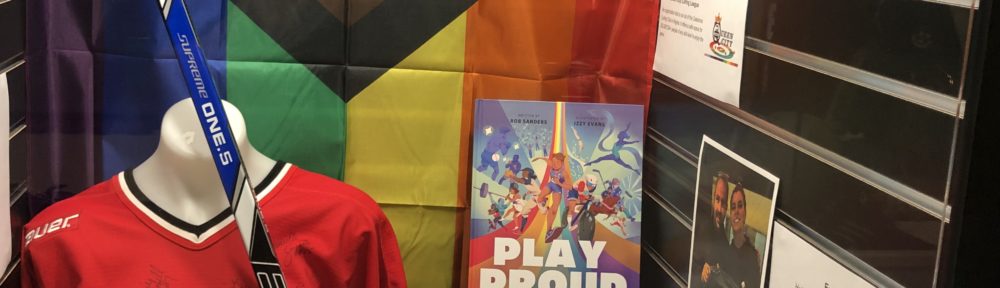
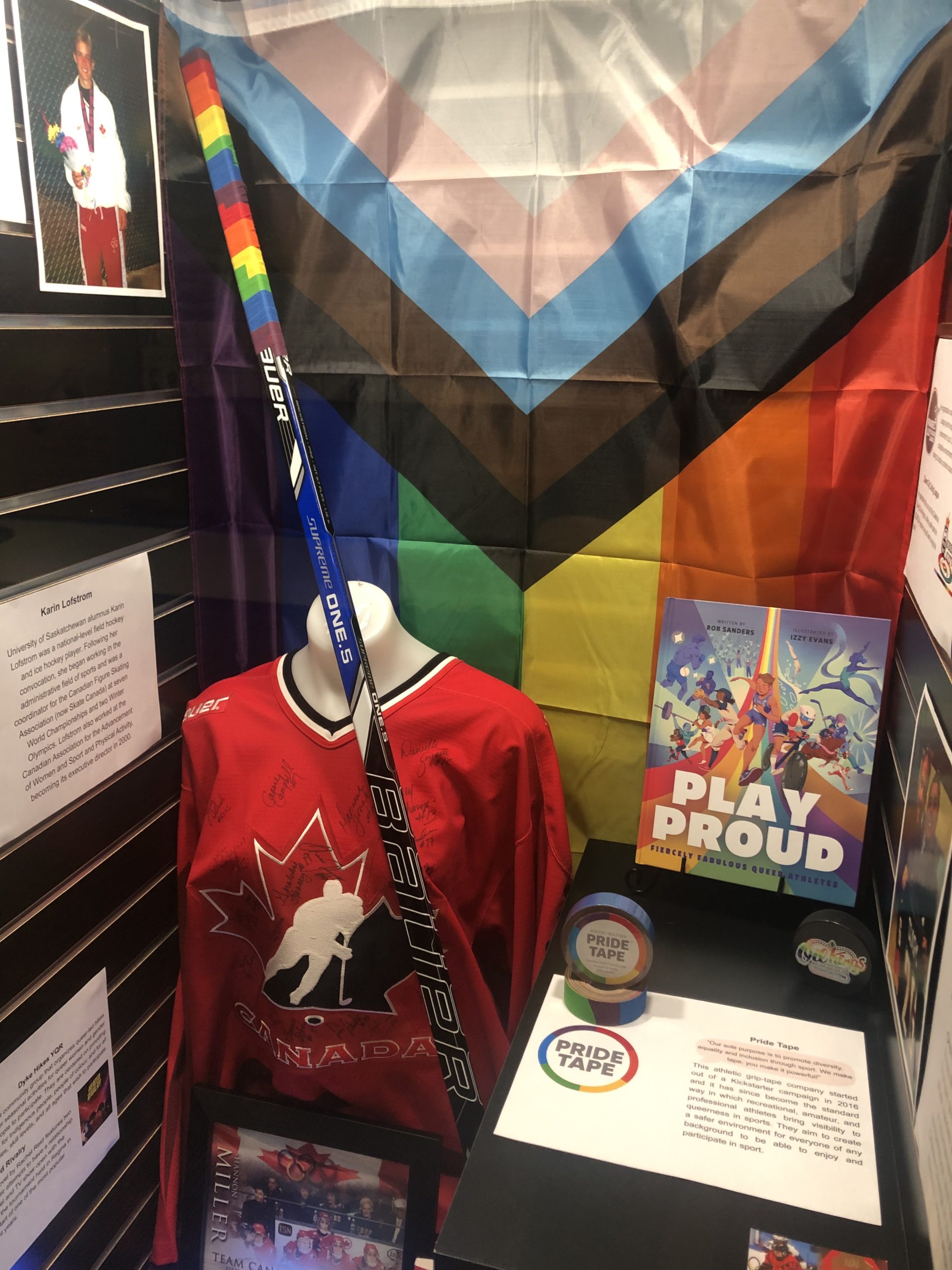
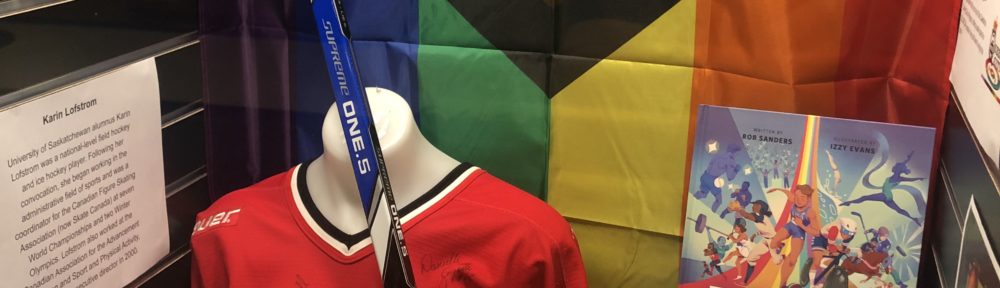
It is a common stereotype that the antithesis of queerness is sports. Many of us have seen it in films or media, in which jocks bully the queer kids, or someone is gay and therefore has no interest in sports (CAAWS, 2006). This also is written because in some ways it is true, and because it is seen in media, we feel the influence to perpetuate it. As a student employee at the hall, the topic of queerness is something I have always wanted to explore, because in many ways, I grew up in sport and loved it, but as a queer person, there are many ways in which sport does not love me back. I dropped out of sports at a young age and felt alone in this until I reached adulthood. It was when I started studying historical perceptions of gender and sexuality, it gave me the tools to discuss these feelings of ostracization with my peers that my interest in sport sparked once more. With this project, I hope to explore the experiences of 2SLGBTQIA+ athletes in Saskatchewan and the organizations that make a safe and inclusive space in sport.
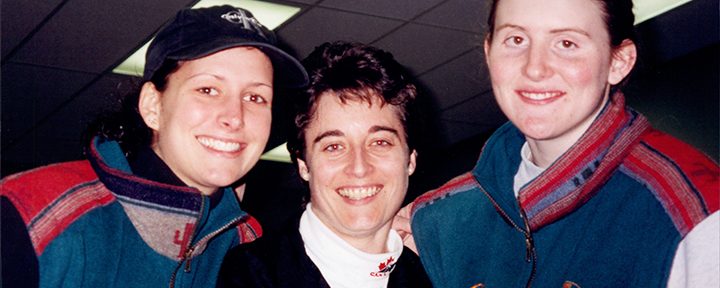
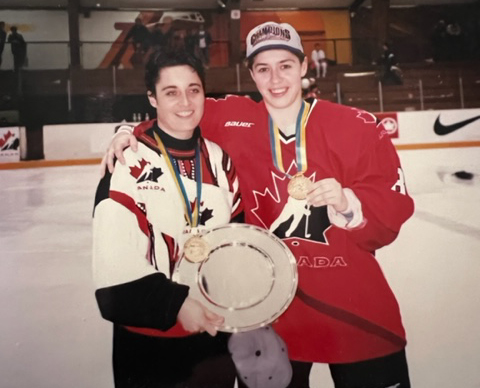
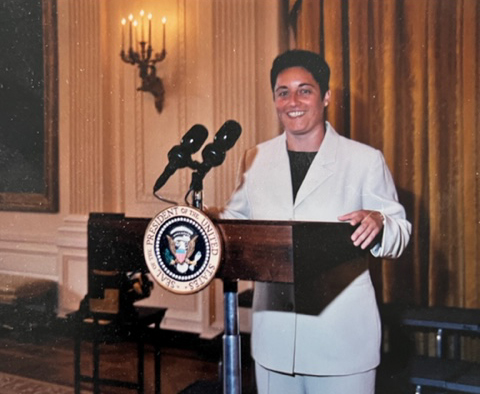
Why does visibility matter in sport? Both of the Saskatchewan athletes I interviewed, Karin Lofstrom and Jacki Nichol, discussed how having other out teammates and coaches made their experiences in sport easier, and felt that it was safer for them to be open about their sexuality because of it. Karin Lofstrom is a Saskatchewan Sports Hall of Fame inductee, whose career as an athlete and sport administrator has made her a global leader in advancing inclusion in sport. Karin explains that, “sometimes the confidence you got playing sports, helped [you have] a confident identity.” and they had both discussed how it felt safe in their respective sports because other players and coaches were out. However, Karin also discussed how moving into the figure skating world, there were not any gay women, and it was a huge environment shift in which it was not even a consideration that a lesbian would be in figure skating administration. She also brings up the idea of women’s sport being full of lesbians, discussing that, “if you put your girls in sport that they were going to be lesbians, that was a myth. Or that they would get turned on or get hit on, all of this scary stuff people thought was going to happen.” She then goes on to discuss that on behalf of the Canadian Association for the Advancement of Women and Sport and Physical Activity, she worked to eliminate stigma by doing interviews with queer people and then creating workshops for sports associations to be more inclusive (Lofstrom, 2026). “Those steps of getting people to just start talking about it and understanding what’s the truth [and] what’s [a] myth.” She also discussed how different sports have different cultures around queerness, noting that it is particularly harder for more internationally competing athletes to be able to be open due to many laws discriminating against 2SLGBTQIA+ people.
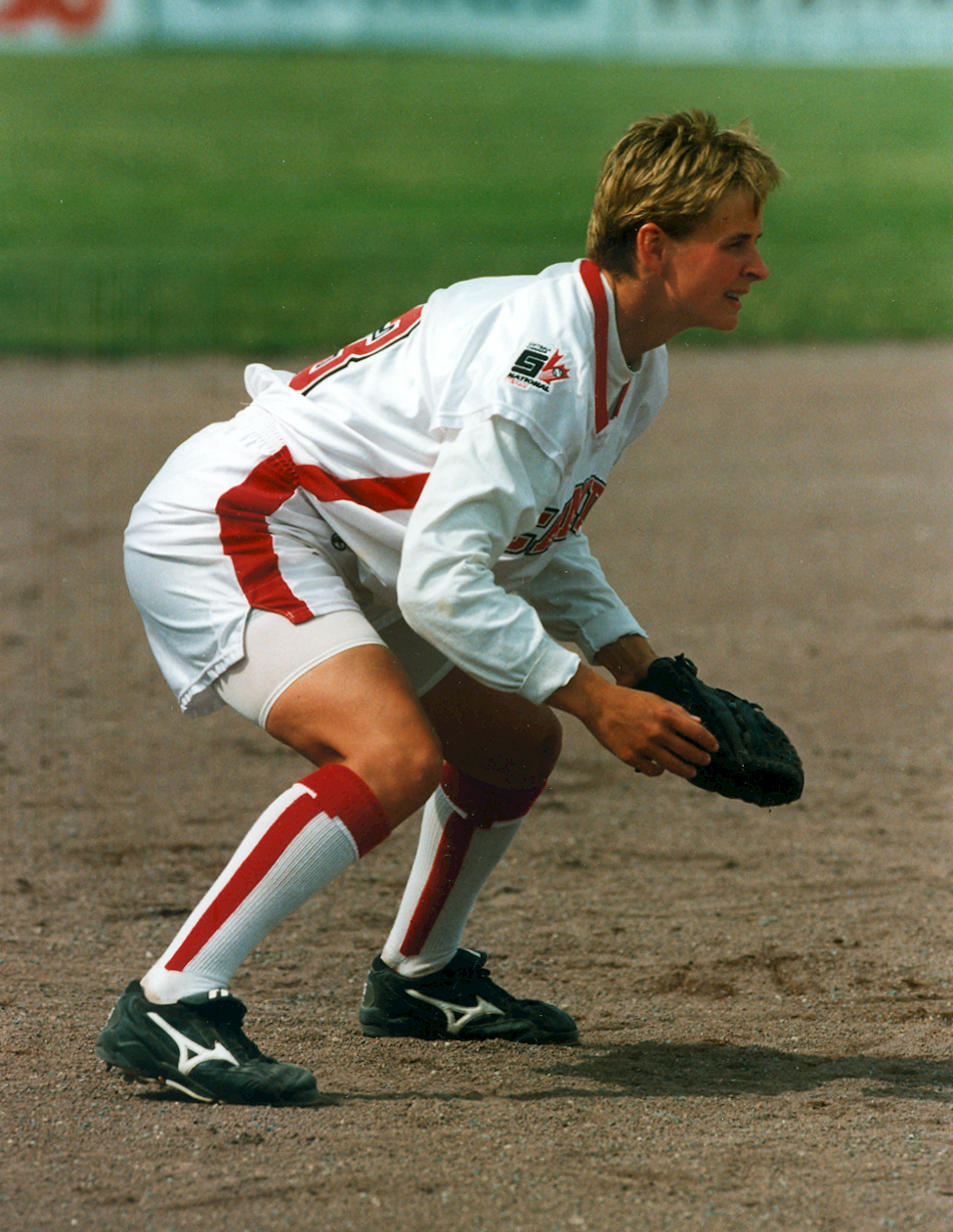
Jacki Nichol
Jacki Nichol is a former softball player that competed for Canada in many tournaments. In my interview with her, she discussed that while she was at the Olympics in 2000, spaces that remained only for athletes felt more comfortable to be in, but there was still hesitation about being publicly open about sexual identities. This is in contrast to now, in which many Olympics have hosted gay villages for the athletes and have statistical data on identities, although there is still concern about being out when it comes to national and financial support of athletes. Nichol also mentioned how she traveled with her partner and child during her last year competing on the national team, being one of the first athletes to be competing while also caring for a child and being supported. Nichol also mentions how starting with one other person to support identity, “it kind of just snowballs and becomes normal for everyone else.” Being open about who she is, is something that has come a bit later for her,
“Attending these big events, and I’m able to attend them with my two boys, with my partner, and with my family, all of us together. Showcase and [let] people see the pictures and the stories of me with my partner, and that story I might not have been able to tell as openly and honestly back when I was competing. In retrospect and years later, being honored as a legend, it’s kind of refreshing to be able to just do that as who I am and with my same-sex partner and with my children.”
The stories shared by Karin and Jacki highlight how meaningful visibility and acceptance can be for individuals. Equally important is organizations that facilitate the spaces that allow participants to be their most authentic selves.
In an interview with Colette “Parks ’n Wreck,” I learned that the Regina Pile ’O Bones Roller Derby Club is an organization that excels in terms of inclusivity, allowing athletes to be on teams of the gender they feel most comfortable with and with others of the same skill/competitive level. There are many other sports and recreational groups in this province that seek to keep people active while breaking down these barriers of sexual identity and gender as well. After this discussion about experiences with marginalized identities in sport, I wanted to end off by bringing attention to these organizations that have their boots on the ground and help make material differences in the local community. Prairie Lily Curling League (Saskatoon) and Queen City Curling League (Regina) are leagues that are focused on bringing 2SLGBTQIA+ people of any skill level into the game of curling. Queer Fit Club is an organization that started out of Regina, that sought to create a safe group to be active and try different sports. In this same realm, Dyke Hikes YQR is a group for hiking and participating in seasonal activities for queer women and gender diverse people. This is not meant to be the beginning and end of the discussion of 2SLGBTQIA+ inclusion in sports, nor is it meant to define what Saskatchewan queer sport looks like. This is meant to open the door for more discussion on the topic, as more we look to continuously improve ourselves and expand the limits of what we think sport is, and what it can be.
Bibliography
Canadian Association for the Advancement of Women and Sport and Physical Activity. (2006.) ‘Seeing the Invisible, Speaking about the Unspoken’: A Position Paper on Homophobia in Sport.
Lofstrom, Karin, and Oliver Tymo. (2026, May 8) Microsoft Teams Interview.
Nichol, Jacki, and Oliver Tymo. (2026, May 12.) Microsoft Teams Interview.
Parks, Colette, and Oliver Tymo. (2026, May 18.) Zoom Interview.
Further Reading (in Chicago style)
Butler, Judith. Gender Trouble: Tenth Anniversary Edition 2nd ed. Routledge. 2000.
Canadian Association for the Advancement of Women and Sport and Physical Activity. Sex Discrimination in Sport: an Update. 2008.
Caudwell, Jayne ed. Sport, Sexualities and Queer/Theory 1st ed. Routledge. 2006.
Carter, Claire, and Krista Baliko. 2017. “‘These are not my People’: Queer Sport Spaces and the Complexities of Community.” in Leisure Studies, Vol. 36. https://www.tandfonline.com/doi/full/10.1080/02614367.2017.1315164.
Ewing, Lori. (2026, March.) International Olympic Committee urged to drop reported Gender Test Plans for Female Athletes. Accessed May 24, 2026. https://www.cbc.ca/sports/olympics/summer/athletics/track/international-olympic-committee-gender-testing-plans-female-athletes-9.7132090.
Gorczynski, Paul, Claudia L. Reardon, and Cindy Miller Aron. 2022. “Lesbian, Gay, Bisexual, Trans, and Queer Mental Health in Elite Sport: A Review.” Advances in Psychiatry and Behavioral Health 2 (1): 9–16. https://doi.org/10.1016/j.ypsc.2022.03.002.
International Olympic Committee. (2026, March.) International Olympic Committee announces new Policy on the Protection of the Female (Women’s) Category in Olympic Sport. Accessed May 29, 2026. https://www.olympics.com/ioc/news/international-olympic-committee-announces-new-policy-on-the-protection-of-the-female-women-s-category-in-olympic-sport.
Nieman, Craigory V., Sara Barnard Flory, Rebecca Cavazos-Wylie, and Leah R. Burger. 2026. “LGBTQ+ Youth Perceptions of Barriers to Physical Activity and Sport: A Mixed
Methods Study.” Sport, Education and Society: 1–13. https://doi.org/10.1080/13573322.2026.2639532.
Storr, R., L. Nicholas, K. Robinson, and C. Davies. 2022. “‘Game to Play?’: Barriers and Facilitators to Sexuality and Gender Diverse Young People’s Participation in Sport and Physical Activity.” Sport, Education and Society 27 (5): 604–17. https://doi.org/10.1080/13573322.2021.1897561.
Rayter, Scott, ed., and Laine Halpern Zisman, ed. 2022. “Part 7: Sport.” in Queerly Canadian: An Introductory Reader in Sexuality Studies 2nd ed. Women’s Press. 536-616.
Westhead, Rick. We breed Lions: Confronting Canada’s Troubled Hockey Culture. 2025.
About the Author
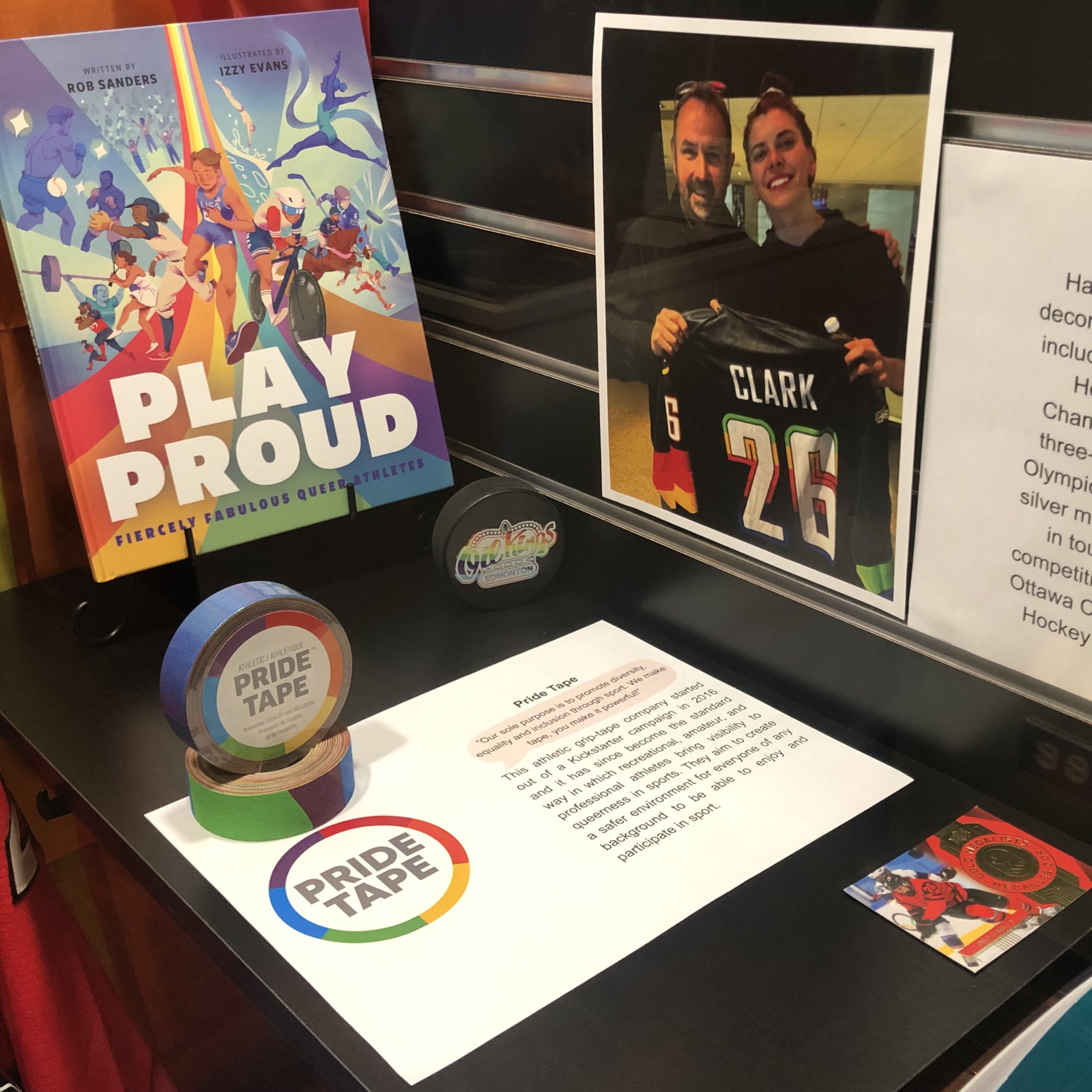
Oliver Tymo is a student at the University of Regina, studying History and Museum and Heritage Studies. As a weekend staff member of the Saskatchewan Sports Hall of Fame, he was invited to research and curate a display on 2SLGBTQIA+ athletes and organizations in Saskatchewan. This is a reflection on interviews they conducted and is an accompaniment to the Game Changer: Pride in Sport exhibit.