The National Day for Truth and Reconciliation on September 30th honours the children who never came home and the survivors of the residential school system, as well as their families and communities.
The commemoration of the history and ongoing impact of the residential school system is an important part of the reconciliation process. The National Day for Truth and Reconciliation was established in response to Call to Action 80 of the Truth and Reconciliation Commission of Canada, which called for a federal statutory day of commemoration.
At the Saskatchewan Sports Hall of Fame, we are committed to following the Truth and Reconciliation Commission of Canada’s 87th Call to Action that calls on sports halls of fame to provide public education that tells the national story of Aboriginal athletes in history.
This year the Hall of Fame was proud to share some of the stories of Saskatchewan’s Indigenous athletes at several events around the province. The Hall created posters sharing the biographical stories of some of the SSHF’s Indigenous inductees. In addition, stickers were created to hand out to kids that also featured Indigenous athletes from the province. Both the stickers and posters accompanied the Hall of Fame’s Travelling Mobile Exhibit during five stops in the province, including a trip to the Tony Cote Summer Games in Battlefords in July.
The Hall of Fame has a display case and video kiosk celebrating Saskatchewan Indigenous athletes and their achievements on permanent display at the Hall of Fame, as well as a separate exhibit in the Physical Activity Complex at the University of Saskatchewan’s College of Kinesiology in Saskatoon.
Several of the Hall of Fame’s inductees were victims of the residential school system in Saskatchewan. The fact that they were able to go on to reach their great athletic achievements despite what they suffered as children is remarkable and an important story to share for future generations.
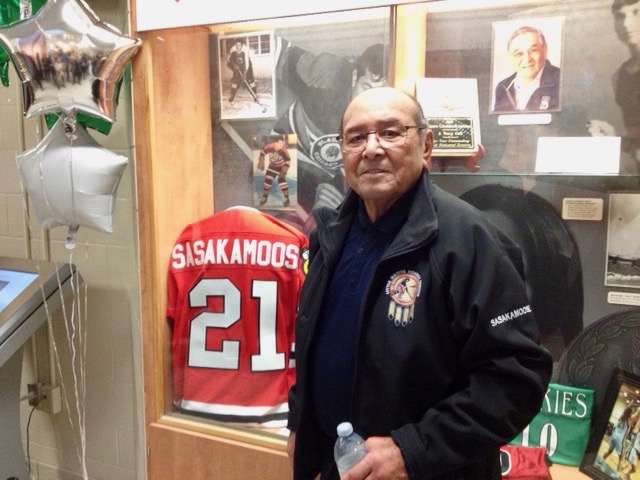
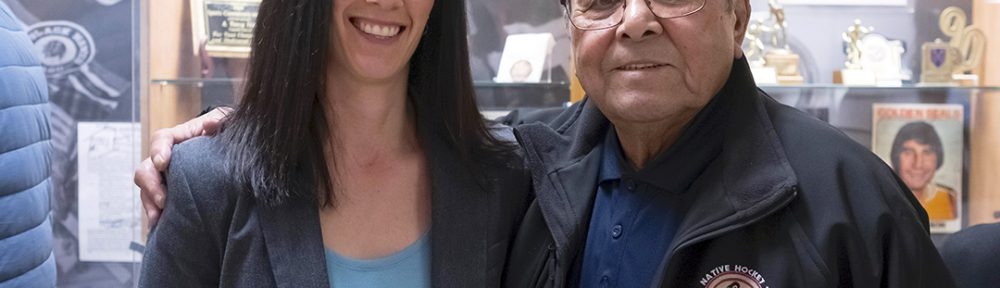
Fred Sasakamoose at the opening of the SSHF’s Indigenous sport exhibit at the University of Saskatchewan.
David Stobbe/StobbePhoto.ca
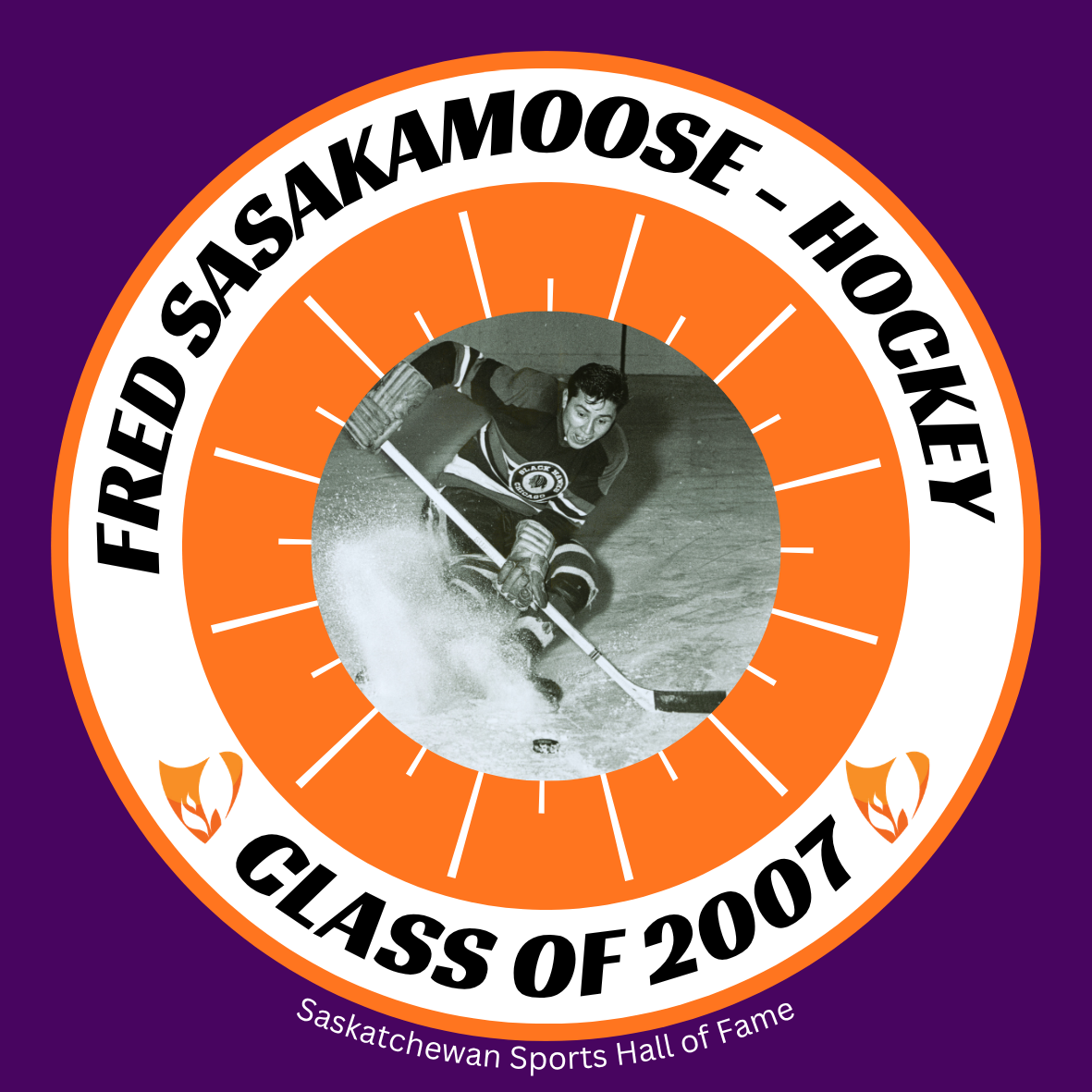
When Fred Sasakamoose was six years old, he and his brother Frank were taken from their parents’ home in the Ahtahkakoop Cree Nation by Indian agents from the Canadian government and driven with 30 other children to the St. Michael’s Indian Residential School in Duck Lake more than 100 kilometres away.
Sasakamoose wrote vividly and candidly about his experience at the residential school in his 2021 autobiography Call Me Indian: From the Trauma of Residential School to Becoming the NHL’s First Treaty Indigenous Player. He suffered horrible abuse at the school as well as dehumanizing treatment along with the other students.
Despite all that he suffered as a child, Sasakamoose excelled as a hockey player and reached the National Hockey League as a 19-year-old in 1953 with the Chicago Black Hawks. In doing so, Sasakamoose became the first Indigenous person with Treaty status to play in the NHL.
Sasakamoose spent 35 years as a Band Councillor of the Ahtahkakoop Cree Nation, including six as Chief. He worked to give back to his community and build and develop minor hockey and other sports there.
Alex Decoteau was born on the Red Pheasant First Nation in 1887 and was of Cree and Métis descent. After his father died, Alex – who was four years old – was sent to the Battleford Industrial School along with his four siblings.
When it opened in 1883, the Battlefords Industrial School was the first residential school in Canada. Two more schools opened a year later and the Davin Report – which called for the “aggressive assimilation” of Indigenous children through the use and expansion of these new residential schools – was submitted to the Federal government.
After his time at the Battlefords Industrial School, Decoteau moved to Edmonton, where he became the first Indigenous police officer in Canada in 1911. He was also a world-class distance runner. He became the first Saskatchewan athlete to compete at the Olympic Games when he ran the 5,000 metres in 1912. He served in the 202nd Infantry Battalion and the 49th Battalion during the First World War and was killed during the Second Battle of Passchendaele in 1917.
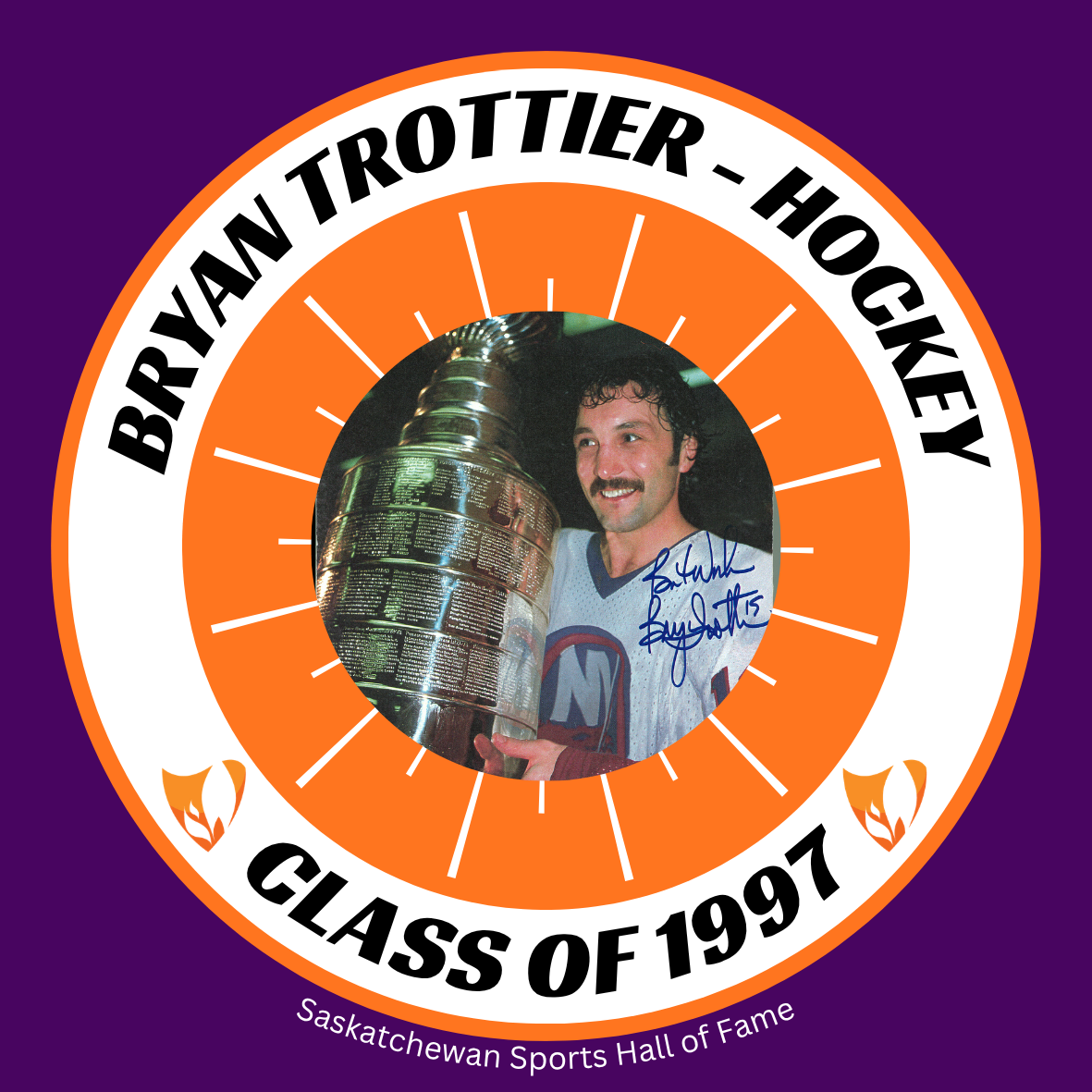
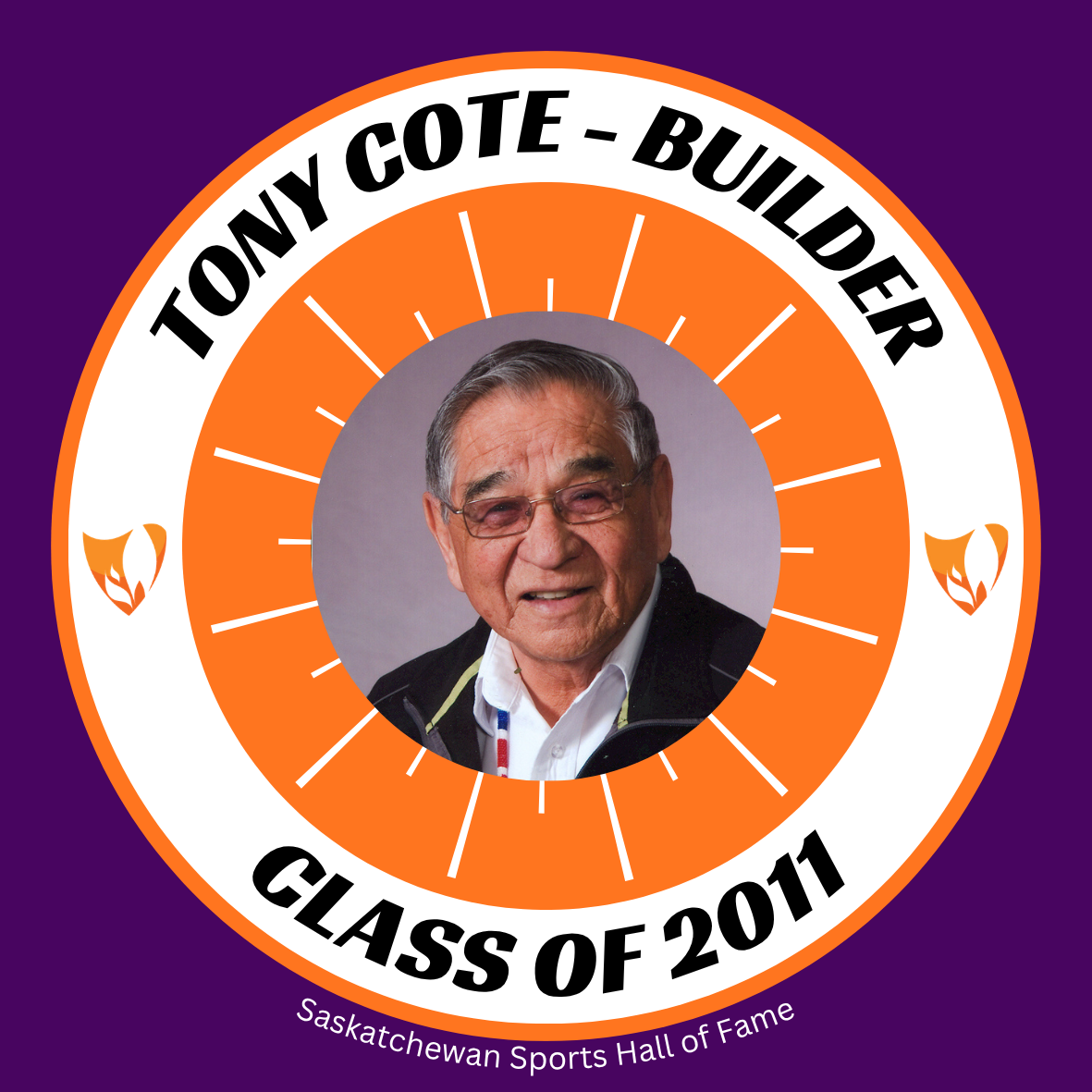
The Saskatchewan Sports Hall of Fame currently has 11 individual athletes who identify as Indigenous and have been inducted. Those athletes and builders are: Paul Acoose, Colette Bourgonje, Tony Cote, Alex Decoteau, David Greyeyes, Jacqueline Lavallee, Ray Mitsuing, Jim Neilson, Claude Petit, Fred Sasakamoose, and Bryan Trottier.
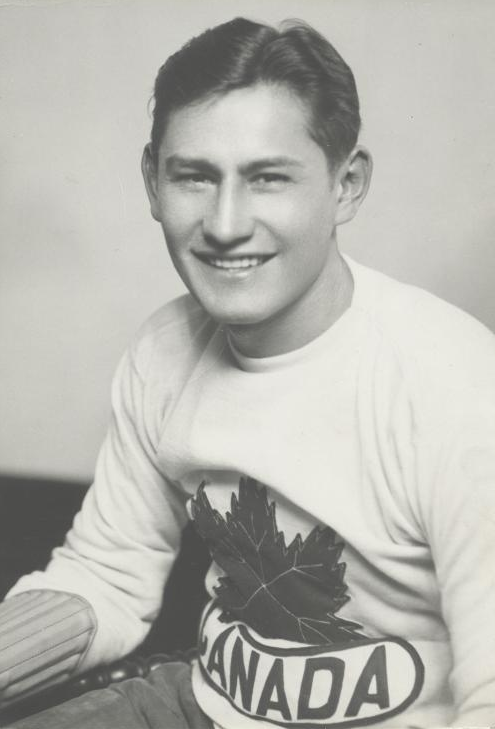
Ken Moore
Kenneth Moore, from the Peepeekisis Cree Nation, was inducted into the SSHF as a member of the 1930 Regina Pats hockey team that won the Memorial Cup. Moore is also the first Indigenous athlete to win an Olympic gold medal.
Moore was born in 1910 as the third of eight siblings. His two older brothers had been taken to the Brandon Indian Residential School in Manitoba – more than 300 kilometres away. The two older Moore brothers died at the Brandon Indian Residential School with no details or cause provided to the family. Kenneth would have been forced to attend the school when he turned seven. Instead, the Moore family fled the Peepeekisis First Nation in the middle of the night. The family settled in Regina, which was still more than 100 km from their home, but the younger Moore children were able to avoid the residential school system.
Ken Moore would star as a right winger on the Regina Pats junior hockey team. In 1930, the Pats met the West Toronto Nationals in the Memorial Cup final. Moore would score the game-winning goal with 40 seconds left which gave the Pats the series win and their third Memorial Cup in six years. He also attended Campion College and Regina College on a scholarship where he captained the hockey and rugby teams.
Moore later joined the Winnipeg Hockey Club and helped them claim the 1931 Allan Cup, the national amateur hockey championship. As Allan Cup champions, Winnipeg also earned the right to represent Canada at the 1932 Olympic Winter Games. Canada won five games and tied one to earn their fourth straight Olympic gold medal in hockey.
The Saskatchewan Sports Hall of Fame is proud to be physically located in Treaty 4 territory, which is home to the Cree, Dakota, Lakota, Nakota, and Saulteaux people since time immemorial and are the traditional homelands of the Métis Nation. The Saskatchewan Sports Hall of Fame also celebrates the history of sport and the people from the land that is covered by Treaties 2, 4, 5, 6, 8, and 10. These lands have been the home of the Cree, Dakota, Dene, Lakota, Nakota, and Saulteaux people since time immemorial and are the traditional homelands of the Métis Nation.